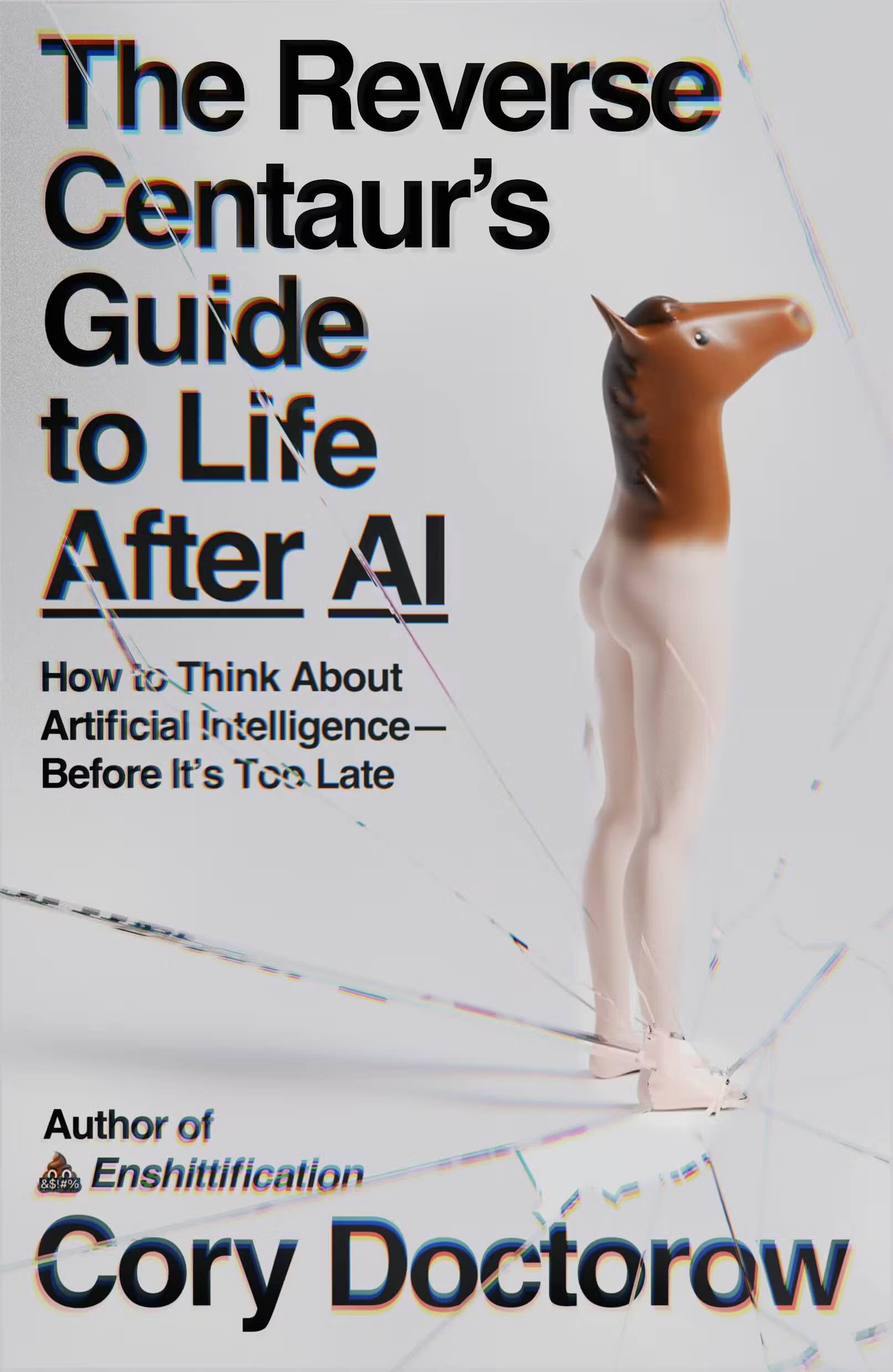
I read The Reverse Centaur's Guide to Life After AI by Cory Doctorow (the person who coined enshittification) back in August and I'm still thinking about it. The whole book hangs on the difference between being a user of AI and being used by AI, and I think it will resonate with anyone who uses technology and is thinking about AI at a larger scope than just their own personal interface.
The passage I keep coming back to is about what these tools actually know:
“We sometimes talk about training an AI as though we were teaching it about the subjects of the documents we’ve used to train it. But when an AI ingests a Wikipedia entry about types of soup, it’s not learning anything about soup. It is learning about the word frequency in articles about soup.”
This is the part that resonated with me most, because I see people offloading their thinking to AI. Sometimes it's because they're busy and sometimes it's because they don't know how to do the task. Rather than using it as a tool that works with them, they push all of the work onto it. And the thing they're pushing it onto doesn't know anything about soup.
The other one is closer to why I think the book matters:
“science fiction tells us that the most important aspect of a new technology isn’t what the machine does, it’s who it does it for and who it does it to.”
It's easy to judge AI by what it does in my own editor or inbox. Doctorow keeps pulling the question back out to who the tool is working for and who is on the receiving end of it. I wrote about a small version of this in The Numbers Are for Decisions, Not Scoreboards, where AI writes more of the code and the review load lands on whoever is left reading it.
It's a short book and worth the time. If you use these tools every day, read it.